
How to Fix Cloudy Pool Water Fast (7 Easy Steps)
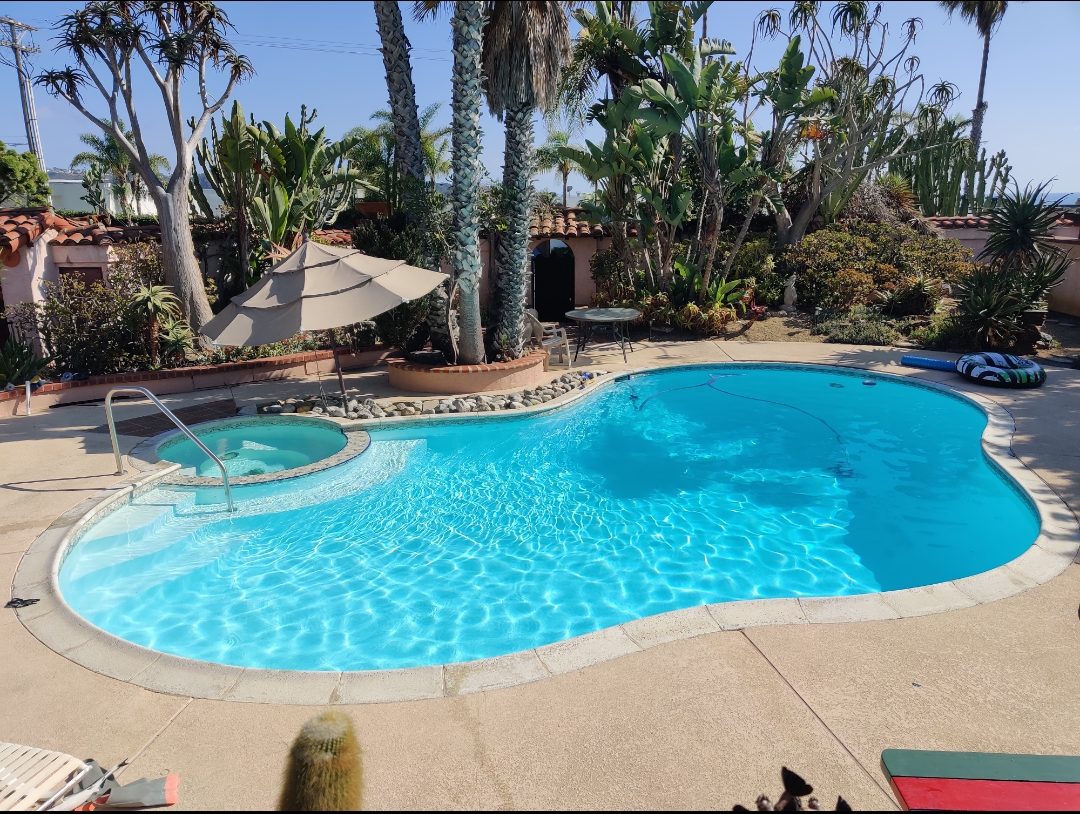
If you step outside your home and notice your pool water looks cloudy or dull, it can be frustrating and a little concerning. The good news is that, in most cases, you can fix it quickly by following a few simple steps and understanding your pool’s needs.
To fix cloudy pool water fast: test your water, balance the chemicals, clean or backwash the filter, run your system for 8 to 12 hours, and use a clarifier if needed. Most pools clear within 24 to 72 hours once these steps are done correctly.
In this guide, you’ll see what usually causes cloudy water and exactly what you can do to fix it and keep it from coming back.
Table of contents:
- Why Is Your Pool Water Cloudy?
- Steps to Fix Cloudy Pool Water
- How to Prevent Cloudy Pool Water
- Cloudy Pool Water Problems in Carlsbad and Nearby Areas
- FAQs
Why Is Your Pool Water Cloudy?
If your pool water looks cloudy, it usually means something is off in your water balance or circulation. Most causes are common, and once you understand what’s happening, you can fix it quickly.
Pool Filtration
Your pool filter is one of the main systems keeping your water clear. If it’s not working properly, small particles will stay suspended in the water, making it look dull or cloudy.
When your filter is dirty, clogged, or running for less than eight hours a day, it can’t do its job well. You may notice the water slowly turning hazy, even if your chemical levels seem normal.
Chemical Imbalance
Cloudy water often happens when your pool chemicals are not balanced correctly. If your chlorine drops below 1 ppm or your pH climbs above 7.8, your water can lose clarity quickly, and high pH also reduces how well chlorine sanitizes.
Alkalinity outside the 80 to 120 ppm range can further destabilize your water, making it harder to hold a proper balance. Even small swings in these levels can cloud an otherwise well-maintained pool.
Debris and Organic Matter
Leaves, dirt, sunscreen, and other small debris can build up in your pool over time. These tiny particles are usually too small for your skimmer to catch fully.
As they break down, they float in the water, creating a cloudy or murky appearance. This is especially common after windy days or heavy pool use.
Algae Growth (Early Stage)
Early algae growth can make your pool water look slightly cloudy or give the water a dull, greenish tint before a full bloom takes hold. You might not see it clinging to the walls yet, but it’s already affecting water clarity.
This usually happens when chlorine levels drop below 1 ppm, especially during hot weather or after heavy rain dilutes your chemicals. If you act early, you can stop it before it turns into a full green or black algae problem.
After Shocking or Heavy Pool Use
Right after shocking your pool, the water can sometimes look cloudy for a short time. This is normal because the shock is breaking down contaminants in the water.
Heavy pool use can also stir up oils, sweat, and dirt from swimmers. When this happens, your pool needs extra filtration time to clear everything out properly.
Steps to Fix Cloudy Pool Water
If your pool water is already cloudy, don’t worry. You can clear it up by following a few simple steps in the right order.
Step 1: Test Your Pool Water
The first thing you should do is test your pool water to understand what’s causing the problem. This helps you avoid guessing and makes your next steps more effective.
Use a test kit or test strips to check your chlorine, pH, alkalinity, and calcium hardness levels. Here are the ideal ranges to aim for:
- Free chlorine: 1 to 3 ppm
- pH: 7.2 to 7.6
- Alkalinity: 80 to 120 ppm
- Calcium hardness: 200 to 400 ppm
Once you know the levels, you can make the right adjustments.
Step 2: Balance the Chemicals
After testing, the next step is to balance your pool chemicals. Start with alkalinity first, then pH, then chlorine. Correct them in this order to get the most stable result.
When your water is balanced, your pool will usually start to look clearer within 24 to 72 hours. It also helps your sanitizer work the way it should.
Step 3: Clean or Backwash the Filter
Your pool filter plays a big role in clearing cloudy water. If it is dirty, it won’t be able to remove small particles from your pool.
The way you clean depends on the type of filter you have. If you’re using a sand or DE filter, you should backwash it until the water runs clear. For cartridge filters, just take them out and rinse them well with a hose. And if it’s been a while since you’ve given your filter a deep clean, a full chemical soak can help get things flowing properly again.
Step 4: Brush and Vacuum the Pool
Brushing your pool walls and floor helps loosen dirt and buildup that you may not see. This pushes those particles into the water where they can be filtered out.
After brushing, vacuum your pool to remove all settled debris. Run the filter for at least an hour after vacuuming to clear out anything stirred up in the process.
Step 5: Shock the Pool (If Needed)
If your pool is very cloudy or you suspect algae, you need to shock it. Use a calcium hypochlorite shock at the dosage listed on the product label, usually 1 pound per 10,000 gallons for a standard shock. If the water is really cloudy or has visible algae, you can double that amount.
It’s best to shock your pool in the evening so sunlight doesn’t break it down before it can work. Let the filter run overnight, and don’t let anyone swim until the free chlorine drops back to around 1 to 3 ppm. That usually takes about 8 to 24 hours.
Step 6: Run Your Pool Filter Longer
Your filter needs enough time to cycle through the water and remove suspended particles. If your pool is cloudy, run your filter for at least 8 to 12 hours a day until it clears up.
If cloudiness persists after a day or two of extended filtering, check whether your filter needs cleaning or whether the pump is working at the correct flow rate.
Step 7: Use a Pool Clarifier or Flocculant
If your pool is still cloudy, a clarifier or flocculant can help finish the job. These products work by grouping tiny particles so they can be removed more easily.
A clarifier binds those particles into larger clusters that your filter can catch. Just keep the filter running after adding it.
A flocculant works faster by sinking all particles to the bottom as a heavy sediment, but you must vacuum it to waste rather than through the filter, or you’ll end up sending it right back into the water.
How to Prevent Cloudy Pool Water
Once your pool is clear, the goal is to keep it that way with simple habits. A little regular care goes a long way and helps you avoid dealing with cloudy water again.
- Test your pool water regularly: You should check your water at least once or twice a week to catch problems early. Balanced chemicals help prevent cloudiness and keep your pool safe to use.
- Keep your chemicals properly balanced: Ensure your chlorine, pH, and alkalinity remain within the proper ranges. When these levels are stable, your water stays clear, and bacteria or algae are less likely to grow.
- Run your pool filter every day: Run your pool filter for about 8 to 12 hours a day to keep water circulating and remove fine particles before they build up.
- Clean your filter system regularly: A dirty filter can’t trap debris effectively. Backwash or rinse it as needed to keep it working properly.
- Remove debris as soon as you see it: Leaves, dirt, and insects can quickly affect your water if left in the pool. Skimming and cleaning your pool often helps stop cloudiness before it starts.
- Brush and vacuum weekly: Dirt and algae can stick to pool surfaces even when the water looks clear. Brushing and vacuuming help prevent buildup and early algae growth.
- Shock your pool when needed: After heavy use, rain, or hot weather, shock your pool to eliminate contaminants and restore clarity.
Cloudy Pool Water Problems in Carlsbad and Nearby Areas
If you live in Carlsbad or nearby coastal areas like Oceanside, Encinitas, or Vista, your pool can turn cloudy faster than you might expect. Your local environment has a direct impact on your pool water, even when you maintain it regularly.
The warm sun and high temperatures in this area can quickly deplete chlorine and other pool chemicals. When that happens, your water can lose its balance and start to look dull or cloudy if you don't adjust it regularly.
Coastal air also brings in fine salt, dust, and other small particles that can settle into your pool. On top of that, hard water from the San Diego County supply adds extra minerals like calcium, which can build up and make your water look hazy over time.
You may also notice the effects of the marine layer and year-round pool use. Changes in temperature and frequent swimming can wear down your chemicals more quickly, making it easier for cloudy water to form if you don’t maintain your pool consistently.
FAQs
Why does my pool get cloudy so fast in Carlsbad?
Your pool can get cloudy faster because of heat, strong sun, coastal air, and frequent use. These factors quickly affect your chemical levels and add small particles to your water.
How long does it take to clear cloudy pool water?
Most cloudy pools can clear within 24 to 72 hours if you follow the right steps. The exact time depends on how cloudy your pool is and how well your system is working.
Can you swim in a cloudy pool?
It is not recommended to swim in a cloudy pool because you cannot see the bottom clearly. It may also mean your water is not properly balanced or sanitized, which can allow bacteria to grow.
Does baking soda clear cloudy pools?
Baking soda does not directly clear cloudy water in your pool. It is only used to raise alkalinity, which may help balance your water if that is the issue.
Will a pool clear on its own?
Your pool usually won’t clear on its own without proper treatment. Without action, the cloudiness can get worse over time.
Why is my pool cloudy even though the chemicals are fine?
Your pool can still look cloudy even if your chemicals test normal due to poor filtration, dead algae particles, or very fine debris in the water. In this case, your system may need cleaning, a longer run time, or a clarifier.
Need Help Fixing Cloudy Pool Water in Carlsbad?
If your pool still looks cloudy after trying these steps, it’s time to have a professional take a closer look. Some issues like hidden algae, poor circulation, or filter problems can be harder to fix on your own.
Beachside Pool Service helps homeowners in Carlsbad keep their pools clean, clear, and running efficiently year-round. As a locally owned company, our team can quickly diagnose the problem and get your pool back to normal. Contact Beachside Pool Service today to get your pool clear again.